





Republicans Can Vote YES!
In many elections, California Republicans’ only opportunity is to register their opposition to the policies of the Democratic supermajority. But this year is different!
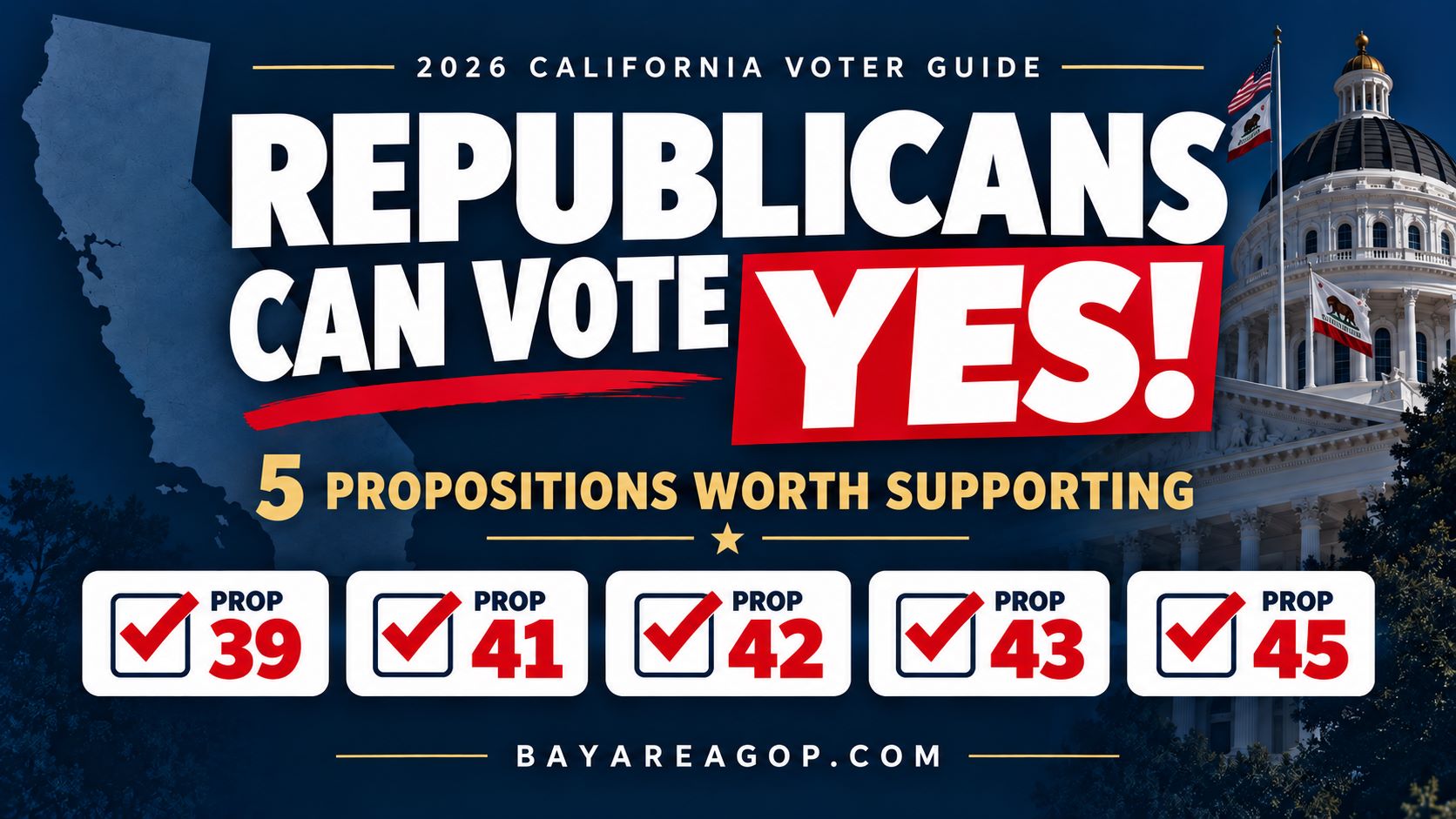
There is much to say YES to on the November ballot. Here are the 5 propositions where Republicans can confidently vote YES!
Yes on Prop 39 – At the top of the list is Voter ID. Prop 39 requires in-person voters to show government issued identification and mail-in voters to show the last 4 digits of a government issued ID. Need we say more?
Yes on Prop 41 – This measure would require the state auditor to review any new tax proposal to determine if cuts could be made to the programs it would fund. It also requires new funding to remain within the state spending limit.
Yes on Prop 42 – Proponents of this measure want to prevent California from taxing assets with unrealized gains. Prop 42 bans new taxes based on ownership of assets like retirement accounts, investment accounts, and personal property. It would overturn Prop 40 which creates a new wealth tax based on assets.
Yes on Prop 43 – Amazingly, the California Legislature placed this measure on the ballot as part of an agreement with Howard Jarvis Taxpayers Association. It closes a court created loophole in Proposition 13 by requiring a 2/3 vote to pass special taxes placed on the ballot via the initiative process. Tax measures proposed by local governments already have a 2/3 vote requirement.
Yes on Prop 45 – Finally we can support a measure that addresses the high cost of housing without requiring new taxes or more borrowing. This proposition would speed up environmental reviews for housing, infrastructure and wildfire mitigation. Thanks to the California Chamber of Commerce for qualifying this measure.
While Republicans don’t always agree, there is consensus between the California Republican Party, Reform California and the Santa Clara County Republican Party that these measures deserve support.
For more information on all the ballot measures check out the Cal Matters 2026 Voter Guide and the BayAreaGOP.com Guide to 2026 Ballot Propositions.
Republicans Can Vote YES!
In many elections, California Republicans’ only opportunity is to register their opposition to the policies of the Democratic supermajority. But this year is different!
There is much to say YES to on the November ballot. Here are the 5 propositions where Republicans can confidently vote YES!
Yes on Prop 39 – At the top of the list is Voter ID. Prop 39 requires in-person voters to show government issued identification and mail-in voters to show the last 4 digits of a government issued ID. Need we say more?
Yes on Prop 41 – This measure would require the state auditor to review any new tax proposal to determine if cuts could be made to the programs it would fund. It also requires new funding to remain within the state spending limit.
Yes on Prop 42 – Proponents of this measure want to prevent California from taxing assets with unrealized gains. Prop 42 bans new taxes based on ownership of assets like retirement accounts, investment accounts, and personal property. It would overturn Prop 40 which creates a new wealth tax based on assets.
Yes on Prop 43 – Amazingly, the California Legislature placed this measure on the ballot as part of an agreement with Howard Jarvis Taxpayers Association. It closes a court created loophole in Proposition 13 by requiring a 2/3 vote to pass special taxes placed on the ballot via the initiative process. Tax measures proposed by local governments already have a 2/3 vote requirement.
Yes on Prop 45 – Finally we can support a measure that addresses the high cost of housing without requiring new taxes or more borrowing. This proposition would speed up environmental reviews for housing, infrastructure and wildfire mitigation. Thanks to the California Chamber of Commerce for qualifying this measure.
While Republicans don’t always agree, there is consensus between the California Republican Party, Reform California and the Santa Clara County Republican Party that these measures deserve support.
For more information on all the ballot measures check out the Cal Matters 2026 Voter Guide and the BayAreaGOP.com Guide to 2026 Ballot Propositions.
LIST OF UPCOMING GOP EVENTS
- Santa Cruz RWF: October Luncheon featuring Shannon Kessler and Carol Pefley
Tuesday, October 27, 2026 / 11:30 am – Seascape Golf Club, , Aptos
- SVACR: When Justice is Unjust featuring Brett Bymaster and Daniel Chung
Wednesday, October 28, 2026 / 9:00 am – Three Flames Restaurant, 1547 Meridian Avenue, San Jose
- Marin Republican Women Federated: Citizen Journalists Holding California Government Accountable, and the November 3rd Ballot Issues featuring Ramin Ekhtiar
Wednesday, October 28, 2026 / 11:30 am – The Club at McInnis, , San Rafael
- Solano RWF: November Luncheon featuring Laurie Hughes and Sharon Wood
Monday, November 2, 2026 / 10:45 am – Jelly Belly Candy Factory, 1 Jelly Belly Lane, Fairfield
- ELECTION DAY
Tuesday, November 3, 2026 / N/A – , ,
- Contra Costa GOP: Election Night Watch Party
Tuesday, November 3, 2026 / 6:30 pm – Location Provided Upon RSVP, , Pleasant Hill
- Carol Pefley for Assembly: Election Watch Party
Tuesday, November 3, 2026 / 7:00 pm – Location Provided Upon RSVP, ,
- Young Americas Foundation: Luncheon with Yeonmi Park
Wednesday, November 4, 2026 / 11:30 am – El Prado Hotel, 520 Cowper Street, Palo Alto
- Liberty Forum: The Socialist Revolution is Already Here featuring Jack Posobiec
Tuesday, November 10, 2026 / 7:00 pm – IFES Portuguese Hall, 432 Stierlin Road, Mountain View
- Mt Diablo Republican Club: The Mission of Intelligence featuring David Yuers
Wednesday, November 11, 2026 / 5:45 pm – Alamo Womens Club , 1401 Danville Blvd, Danville
- Commonwealth Club of San Francisco: Governor Sarah Huckabee Sanders
Thursday, November 12, 2026 / 12:00 pm – Online (Via Zoom), ,
- SPARC and CCR: Midterms and the Path Forward featuring Jamie Fisfis
Thursday, November 12, 2026 / 6:30 pm – Online (Via Zoom), ,
- California Republican Party State Convention 2027 (Sacramento)
Friday, February 26, 2027 / N/A – TBA – Sacramento, , Sacramento
- Leadership Institute: ElecTech 2027 – SAVE THE DATE
Wednesday, April 28, 2027 / N/A – Grand Hyatt at SFO , 55 S. McDonnell Road , San Francisco

Service. Faith. Community.
Himat Bainiwal Runs for Assembly
by Roger Riffenburgh
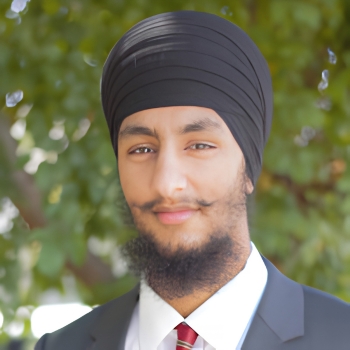
Attorney and City Commissioner Himat Bainiwal is running for South Bay State Assembly District 25. He says “I’m running because California has become increasingly unaffordable, especially here in the Bay Area. Sacramento needs more balance, accountability, and a greater focus on lowering the cost of living rather than continually adding new spending, taxes, and regulations.”
Estate planning is Bainiwal’s legal specialty. He learned during law school that he would rather work “with real people, not corporations”. He likes a job where he can be of service to others.
Bainiwal wears a turban. He explains, “My Sikh faith is an important part of who I am, and my turban is a visible expression of that faith. I believe deeply in God and in the values of service, humility, honest work, and treating every person with dignity.” Sikhism is the fifth largest organized religion in the world, with more than a half a million Sikhs in the United States. Bainiwal volunteers to help put on a kids summer camp at the gurdwara (temple). He also makes a short presentation to San Jose police officer trainees to help them understand Sikh issues.
Himat Bainiwal has another notable duty. “I serve on the City of San Jose Historic Landmarks Commission, which advises the City on historic buildings, landmarks, preservation, and proposed changes to historic properties. I have always loved history, and I find it fascinating that buildings constructed generations ago can still tell the story of the people and communities that came before us.”
Assembly District 25 is completely in Santa Clara County and contains various parts of San Jose including San Jose airport, the Rose Garden district, parts of downtown, Berryessa, Evergreen, East San Jose, and also the largely unpopulated eastern hills over to the Stanislaus County line. It’s currently represented by Democrat Ash Kalra.
Himat Singh Bainiwal was born and raised in San Jose. His grandparents had immigrated from India. He graduated from Silver Creek High School. After attending Evergreen Valley College for two years, he transferred to UCLA, where he earned his BA in history. Two years later he started law school at UC Hastings (now renamed UC Law, San Francisco). After some experience at various firms, he started his own law office in 2019.
Himat lives with his wife in the Evergreen area of San Jose. In his free time, he enjoys hiking and reading about history and economics. “I am particularly interested in how societies and economies develop, what makes institutions successful, and what happens when economic systems are poorly designed.” Find his website at BainiwalForAssembly.com.
California Congressional Redistricting Maps: Current vs Previous Districts
Source: Statewide Database
California Citizens Redistricting Commission – District Viewer
The Commission has developed a district viewer that allows you to more easily navigate visualizations and zoom in and out of geographic areas while layering congressional, State Senate and Assembly boundaries.
Service. Faith. Community.
Himat Bainiwal Runs for Assembly
by Roger Riffenburgh
Attorney and City Commissioner Himat Bainiwal is running for South Bay State Assembly District 25. He says “I’m running because California has become increasingly unaffordable, especially here in the Bay Area. Sacramento needs more balance, accountability, and a greater focus on lowering the cost of living rather than continually adding new spending, taxes, and regulations.”
Estate planning is Bainiwal’s legal specialty. He learned during law school that he would rather work “with real people, not corporations”. He likes a job where he can be of service to others.
Bainiwal wears a turban. He explains, “My Sikh faith is an important part of who I am, and my turban is a visible expression of that faith. I believe deeply in God and in the values of service, humility, honest work, and treating every person with dignity.” Sikhism is the fifth largest organized religion in the world, with more than a half a million Sikhs in the United States. Bainiwal volunteers to help put on a kids summer camp at the gurdwara (temple). He also makes a short presentation to San Jose police officer trainees to help them understand Sikh issues.
Himat Bainiwal has another notable duty. “I serve on the City of San Jose Historic Landmarks Commission, which advises the City on historic buildings, landmarks, preservation, and proposed changes to historic properties. I have always loved history, and I find it fascinating that buildings constructed generations ago can still tell the story of the people and communities that came before us.”
Assembly District 25 is completely in Santa Clara County and contains various parts of San Jose including San Jose airport, the Rose Garden district, parts of downtown, Berryessa, Evergreen, East San Jose, and also the largely unpopulated eastern hills over to the Stanislaus County line. It’s currently represented by Democrat Ash Kalra.
Himat Singh Bainiwal was born and raised in San Jose. His grandparents had immigrated from India. He graduated from Silver Creek High School. After attending Evergreen Valley College for two years, he transferred to UCLA, where he earned his BA in history. Two years later he started law school at UC Hastings (now renamed UC Law, San Francisco). After some experience at various firms, he started his own law office in 2019.
Himat lives with his wife in the Evergreen area of San Jose. In his free time, he enjoys hiking and reading about history and economics. “I am particularly interested in how societies and economies develop, what makes institutions successful, and what happens when economic systems are poorly designed.” Find his website at BainiwalForAssembly.com.
LIST OF UPCOMING GOP EVENTS
- Santa Cruz RWF: October Luncheon featuring Shannon Kessler and Carol Pefley
Tuesday, October 27, 2026 / 11:30 am – Seascape Golf Club, , Aptos
- SVACR: When Justice is Unjust featuring Brett Bymaster and Daniel Chung
Wednesday, October 28, 2026 / 9:00 am – Three Flames Restaurant, 1547 Meridian Avenue, San Jose
- Marin Republican Women Federated: Citizen Journalists Holding California Government Accountable, and the November 3rd Ballot Issues featuring Ramin Ekhtiar
Wednesday, October 28, 2026 / 11:30 am – The Club at McInnis, , San Rafael
- Solano RWF: November Luncheon featuring Laurie Hughes and Sharon Wood
Monday, November 2, 2026 / 10:45 am – Jelly Belly Candy Factory, 1 Jelly Belly Lane, Fairfield
- ELECTION DAY
Tuesday, November 3, 2026 / N/A – , ,
- Contra Costa GOP: Election Night Watch Party
Tuesday, November 3, 2026 / 6:30 pm – Location Provided Upon RSVP, , Pleasant Hill
- Carol Pefley for Assembly: Election Watch Party
Tuesday, November 3, 2026 / 7:00 pm – Location Provided Upon RSVP, ,
- Young Americas Foundation: Luncheon with Yeonmi Park
Wednesday, November 4, 2026 / 11:30 am – El Prado Hotel, 520 Cowper Street, Palo Alto
- Liberty Forum: The Socialist Revolution is Already Here featuring Jack Posobiec
Tuesday, November 10, 2026 / 7:00 pm – IFES Portuguese Hall, 432 Stierlin Road, Mountain View
- Mt Diablo Republican Club: The Mission of Intelligence featuring David Yuers
Wednesday, November 11, 2026 / 5:45 pm – Alamo Womens Club , 1401 Danville Blvd, Danville
- Commonwealth Club of San Francisco: Governor Sarah Huckabee Sanders
Thursday, November 12, 2026 / 12:00 pm – Online (Via Zoom), ,
- SPARC and CCR: Midterms and the Path Forward featuring Jamie Fisfis
Thursday, November 12, 2026 / 6:30 pm – Online (Via Zoom), ,
- California Republican Party State Convention 2027 (Sacramento)
Friday, February 26, 2027 / N/A – TBA – Sacramento, , Sacramento
- Leadership Institute: ElecTech 2027 – SAVE THE DATE
Wednesday, April 28, 2027 / N/A – Grand Hyatt at SFO , 55 S. McDonnell Road , San Francisco
California Congressional Redistricting Maps: Current vs Previous Districts
Source: Statewide Database
California Citizens Redistricting Commission – District Viewer
The Commission has developed a district viewer that allows you to more easily navigate visualizations and zoom in and out of geographic areas while layering congressional, State Senate and Assembly boundaries.